
In the current Out-of-Home (OOH) and retail media landscape, many media owners are facing a frustrating paradox: their networks are expanding, screen counts are climbing, and top-line revenue is growing.
The culprit is usually operational bloat. As a network scales, the manual effort required to manage it often grows at a faster rate than the revenue those new screens generate. When every new asset requires more spreadsheets, more manual scheduling, and more back-and-forth emails to resolve billing disputes, the cost-per-campaign skyrockets. To run a truly profitable DOOH network, the goal must shift from simply adding inventory to reducing the operational friction of managing it. Profitability is driven by reducing the cost-per-campaign, not just increasing top-line revenue.
The Pillars of Modern OOH Network Management
To move from a reactive firefighting mode to a proactive growth model, operators must anchor their OOH network management in a few core technological pillars.
Unified Inventory Control
The greatest enemy of profitability is siloed data. When inventory availability sits across disconnected spreadsheets, systems, or localized files, forecasting becomes unreliable and opportunities are missed. Centralizing all inventory into a single platform creates a true source of truth, giving every stakeholder clear, consistent visibility. This improves forecasting, supports accurate financial reporting, and ensures inventory is properly valued and fully utilized.
Intelligent Scheduling & Campaign Automation
DOOH scheduling is often fragmented across multiple systems, particularly when relying on software tied to different LED manufacturers. This creates inefficiencies, limits flexibility, and increases the risk of errors. By bringing scheduling into a single platform, operators gain full control over campaign execution across every screen. Dynamic scheduling can then automate rotations, day-parting, and pacing based on campaign parameters, reducing manual effort and ensuring campaigns are delivered exactly as planned.
How OOH Networks Can Run More Efficiently and Profitably
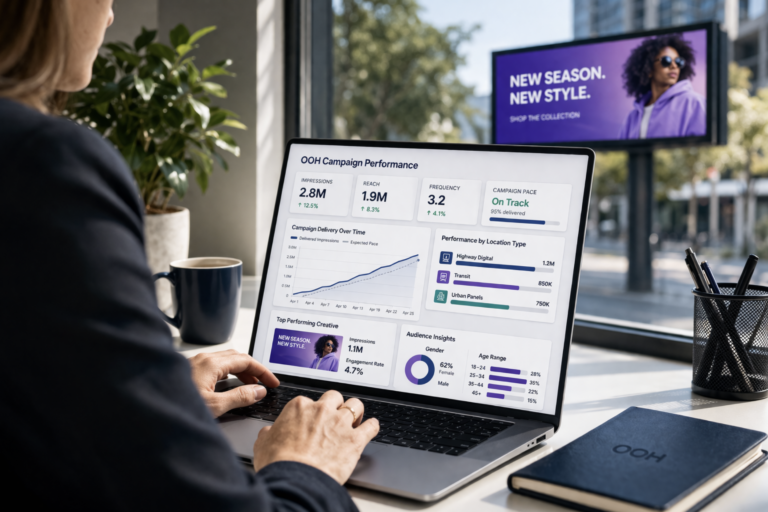
Maximizing revenue is not just about selling more inventory, but selling it more effectively. Without clear insight into performance and demand, high-value slots can be underutilized or mispriced. A unified platform enables smarter pricing, packaging, and allocation of inventory across direct and programmatic channels. This helps prioritize premium campaigns, reduce unsold slots, and drive stronger revenue from every screen.
Real-Time Inventory Availability for Sales
Profitability is a perishable commodity in OOH — an unsold slot today is revenue lost forever. Providing sales teams with immediate, real-time visibility into open inventory enables them to close deals faster and plan more effectively. It eliminates the “let me check and get back to you” delay that often results in missed opportunities and dark screens.
Improving Efficiency to Protect Your Margins
Efficiency is often discussed as a way to save time, but in the OOH world, it is primarily a way to protect your margins from silent revenue leaks.
Identifying the Workflow Bottleneck
Every OOH operator has different operational constraints, and the most significant inefficiencies often sit in different parts of the workflow. For some, it may be campaign reconciliation and reporting. For others, it may be planning, scheduling, or coordination between teams and systems.
What is consistent across all cases is the operational cost of fragmented workflows between campaign planning, delivery, and verification. When these stages are disconnected, teams spend unnecessary time reconciling data, resolving discrepancies, and manually validating campaign execution.
Having the ability to track a campaign seamlessly from planning through to fulfillment is key to reducing this friction. It improves operational efficiency, reduces overhead, and ensures teams can focus on revenue-generating activity rather than manual validation work.
Revenue Protection Through Accuracy
Manual systems are prone to two costly errors:
- Over-delivery: Playing more spots than the client paid for, whether that’s overserving on digital screens or posting additional static placements, essentially giving away free inventory
- Under-delivery: Failing to meet the contracted play count, resulting in client credits, makegoods, and damaged trust. By automating the link between the scheduler and the player, you ensure that you deliver exactly what was sold—protecting the value of every second of airtime.
Scalability Without Headcount Growth
The traditional OOH growth model has often assumed that as networks expand in scale across more faces, operational teams must also grow to keep pace with increased complexity.
Technology challenges this assumption. By automating key workflows across both digital and static faces—such as scheduling and billing reconciliation—operators can support significantly larger networks without a proportional increase in headcount. This is enabled by robust digital signage solutions that allow scalable, connected operations across the network.
A more connected and efficient operating model enables teams to manage higher volumes of inventory and campaign activity with greater consistency and control. This allows OOH operators to scale their networks more effectively, while keeping operational overhead aligned to value rather than volume.
4 Ways Automation Directly Increases Profitability
When looking at how to run a profitable DOOH network, automation provides four direct levers to pull:
1. Increased Inventory Utilization
Automation gives you real-time visibility into unsold inventory, whether that’s gaps in a digital loop or unbooked static sites. These can be quickly identified and filled with programmatic demand, short term bookings or house campaigns that promote your own brand, ensuring your entire network is always working for you.
2. Speed to Market
In a competitive landscape, the fastest operator often wins the buy. If you can move from a signed contract to a live campaign in hours rather than days, you can capture high-value, time-sensitive tactical buys that manual competitors simply cannot process in time.
3. Error Reduction in Billing
Discrepancies between what was scheduled and what was invoiced are a major source of friction. Ad Manager Connect aligns scheduling, delivery, and invoicing automatically, reducing manual disputes and ensuring you get paid faster across both digital and static campaigns.
4. Yield Management & Unsold Inventory
Not all inventory is created equal. Access to real-time performance and demand data enables more effective yield management, allowing operators to make informed decisions on pricing based on factors such as location, format, timing, and audience demand.
Improved visibility across the network helps operators maximise the value of unsold inventory. Instead of leaving a screen dark or a static site unbooked, teams can actively promote available assets, apply tactical pricing, or allocate space to house campaigns that support wider revenue goals. This ensures more of the network is monetised and working harder at any given time.
The Strategic Advantage of Integrated Systems
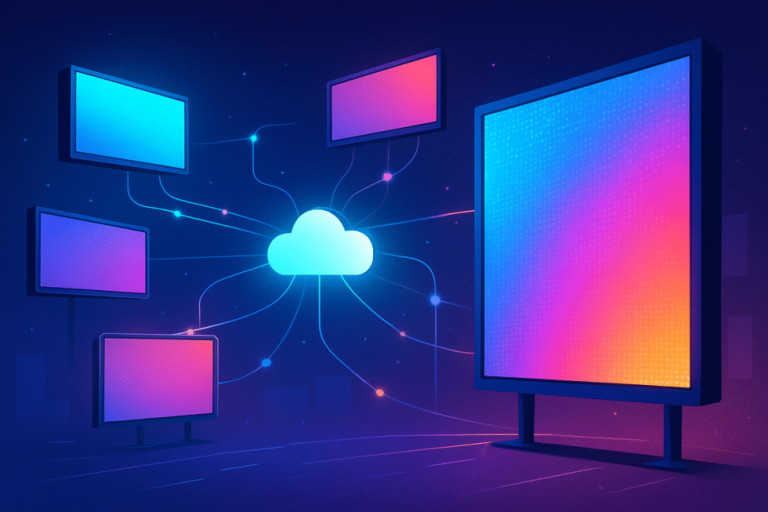
The most successful operators are moving away from a collection of disconnected point solutions toward an integrated workflow. An integrated system connects sales, operations, finance, and reporting into a single stream, eliminating the disconnect between what is sold and what is actually delivered.
This shift allows a business to move from reactive operations—constantly fixing scheduling errors or billing disputes—to proactive revenue optimization. Platforms like Ad Manager Connect enable this transition, giving operators the tools to manage both the technical and financial sides of their network in one place.
Conclusion
In the modern OOH industry, efficiency is no longer a nice to have—it is a competitive necessity and the primary driver of profitability. Every manual process in your workflow acts as an invisible tax on your growth, slowly eroding the margins that your sales team works so hard to build.
By centralizing inventory, automating complex scheduling, and insisting on real-time accuracy, media owners can stop firefighting and start scaling. Operators who embrace these automated workflows gain a measurable advantage, ensuring that as their network grows, their profits grow along with it.
To see how your network can eliminate operational bloat, explore how Ad Manager Connect can streamline your operations and maximize your revenue per screen.