“We’re Too Small for That” — We Hear You
If you’re running a small or growing Out-of-Home (OOH) or retail media network, you’ve probably thought it at some point: We’re not big enough for a management platform yet.
It’s a completely reasonable position. When you’re working with a limited number of screens and a lean team, spreadsheets feel like the smartest option. They’re familiar, flexible, and don’t add another line item to your budget. For many operators, Excel has been the backbone of the business from day one.
And when everything is still manageable, it works. But that’s exactly where the problem begins. What feels manageable today often becomes the very thing that holds you back tomorrow. The issue isn’t that spreadsheets stop working overnight; it’s that the modern advertising environment evolves faster than a manual cell can update.
Addressing the “Overkill” Objection: Why It Feels Right (But Isn’t)
The hesitation to adopt an OOH campaign management platform usually stems from three concerns: cost, scale, and comfort. Let’s look at the flip side of these common myths.
Myth #1: Management Platforms are too expensive.
The Flip: On paper, spreadsheets are free. But this comparison misses the Human Hourly Cost. If an operations manager spends 10 hours a week manually updating availability and reconciling billing, what is that costing in lost sales opportunities? If that same time was spent pursuing new site leases, the ROI would dwarf the cost of a software subscription. Is DOOH software worth it for small networks? Only if you value your time at more than zero dollars an hour.
Myth #2: We don’t have enough inventory to justify the tech.
The Flip: It’s not about the number of screens or sites — it’s about the complexity of what you’re managing. A small network of digital screens or static placements with multiple advertisers, changing creative, and campaign timings can quickly become harder to manage than a large estate running a single, fixed message. Today, complexity is the scale — and that’s exactly where the right technology makes the difference.
Myth #3: Our current system works just fine.
The Flip: “Fine” is often the ceiling. If it takes you hours to generate a post-campaign report, you aren’t operating—you’re compensating. A system that relies on constant human effort to stay accurate isn’t a foundation; it’s a bottleneck.
At a Glance: Spreadsheets vs. Management Platforms
| Feature | Manual Spreadsheets | Management Platform (Ad Manager Connect) |
| Inventory Visibility | Static; requires manual check | Real-time; instant availability |
| Reporting | Manual data entry (Hours/Days) | Automated; instant Proof of Play |
| Error Risk | High (Human error/Double booking) | Low (Automated conflict checking) |
| Client Trust | Fragile; depends on manual accuracy | High; backed by verifiable data |
| Scaling Cost | Requires more staff as you grow | Scales without increasing headcount |
The Quiet Costs of Staying Manual
What makes manual workflows difficult to evaluate is that their biggest costs are invisible. They show up as friction, not as a line item on a profit and loss statement.
The Reporting Trap
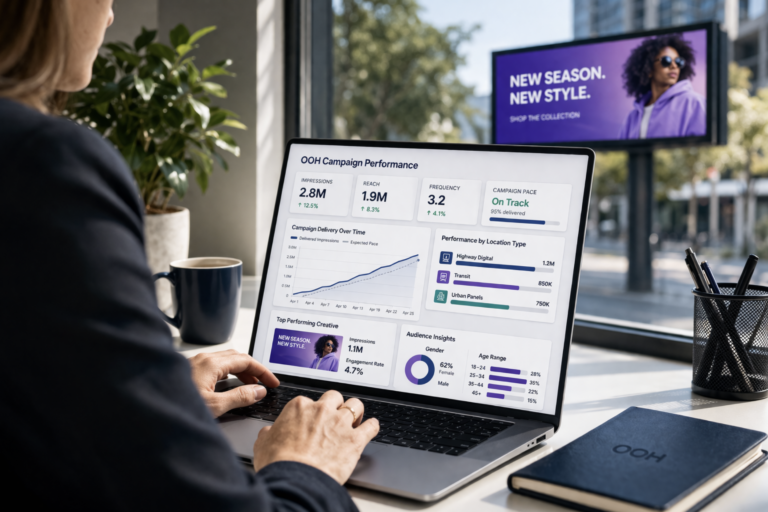
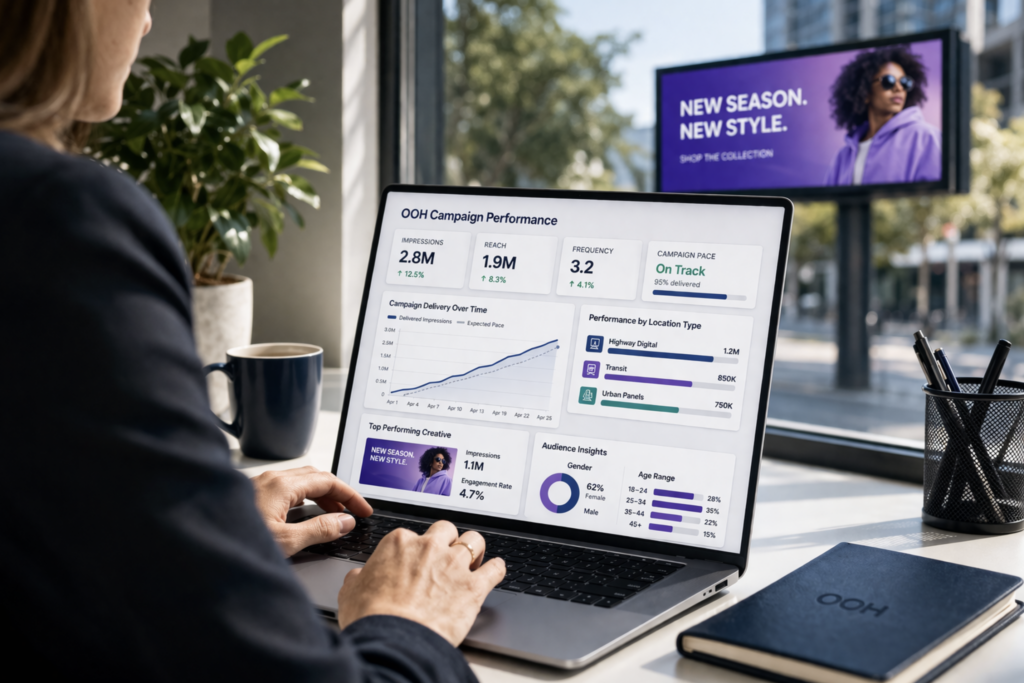
Advertisers today — especially those moving budgets from online channels to OOH — expect big-player reporting. Proof of Play (PoP) and real-time performance summaries are now the baseline. When you build these manually, you are trapped in a cycle of repetitive labor. Meanwhile, operators with the right tools can access these insights instantly. Relying on slow, manual reporting can make even a growing network feel amateur, while timely, reliable data builds the trust needed for repeat bookings.
The Cost of Small Mistakes
Manual entry is the enemy of accuracy. A missed rotation or a billing discrepancy might seem minor, but each one requires a makegood, meaning you are effectively paying the advertiser for your own mistake. Over time, these small leaks quietly erode your profit margins.
Opportunity Cost: The Growth You Can’t See
If your team is currently at capacity managing 10 screens manually, you don’t have the bandwidth to acquire screen number 11. The ROI of OOH automation is most visible here: it clears the administrative fog, allowing you to focus on the network you want to become. This is a primary reason OOH operators must move beyond spreadsheets to maintain a competitive edge.
Why Complexity is the New Scale
Modern OOH network efficiency is tied to the sophistication of the buy. Even small networks are now expected to handle mixed formats, dynamic content, and rapid agency demands. If you cannot turn around a proposal in minutes, a competitor with an automated platform will win the business before you’ve even opened your Excel file.
Is It Actually Overkill? A Diagnostic Checklist
If you’re unsure whether you’ve outgrown your manual processes, ask yourself these reality check questions:
- Do you check multiple places to confirm if a screen is available next Tuesday and schedule it for play?
- Do you spend Sunday nights prepping reports for last week’s campaigns?
- Are you afraid to add more inventory because of the added paperwork?
- Have you ever had to offer a makegood because of a manual scheduling error?
If you answered yes to more than two, your current system is a liability.
Moving From Managing Tasks to Enabling Growth
Adopting a platform like Ad Manager Connect isn’t about acting big. It’s about acting efficient. Instead of juggling disconnected tools, a centralized system brings inventory, scheduling, execution, and billing into a single workflow. This allows you to stop being a data entry clerk for your own business and start being an operator.
Conclusion: Preparing for the Network You Want
Management software isn’t a reward for becoming a big player; it is the engine that allows you to become one. Waiting until your processes break puts you in a reactive position.
Management platforms aren’t about adding complexity to a small network—they are about removing it. By choosing the right tools, you reclaim your time, protect your accuracy, and finally build a network that is ready to scale.